
The Mistake Almost Everyone Makes First
Grab the can of WD-40 sitting on the shelf, spray down every moving part of the garage door, and call it done. It's the first move almost every homeowner makes, and it's tempting for good reason: WD-40 is already in the garage, it's cheap, and the door does sound quieter for a week or two. The problem is that WD-40 is a solvent and water-displacer, not a lubricant. It strips away the grease that's already protecting your hardware, then evaporates, leaving bare metal behind. Within a few weeks the squeak comes back worse, and dust starts sticking to whatever residue is left.
In northern Indiana, that matters more than it would somewhere milder. Winters here bring road salt, slush, and ice that get tracked into garages and splashed onto tracks and hardware. Metal parts that aren't properly protected corrode faster, and corroded hinges and rollers bind, grind, and wear out ahead of schedule. Getting the lubrication right before the cold settles in for good is one of the cheapest ways to protect the whole system.
Tools and Products You'll Need
- Silicone-based garage door lubricant spray (sold specifically for garage doors)
- White lithium grease, for the opener rail or chain
- A clean, dry rag or two
- A soft brush or old toothbrush for debris in tracks and hinges
- Safety glasses
- A step stool or short ladder
Products to Avoid
- WD-40 or other penetrating oils — they displace existing lubricant instead of replacing it, and they attract dust.
- Motor oil or household 3-in-1 oil — too thin, runs off quickly, and doesn't hold up through temperature swings from summer humidity to winter cold.
- Grease gun grease or heavy automotive grease — too thick for garage door hardware, gums up in cold weather, and collects grit.
- Anything sprayed directly into the tracks — tracks should be clean and dry, not lubricated. Lubricant in the tracks just becomes a dust magnet that makes rollers slip.
Step-by-Step: How to Lubricate Your Garage Door
- Close the door and disconnect the opener. Pull the manual release cord so the door is fully under your control before you start working around moving parts.
- Wipe down the tracks. Use a dry rag to clear out dust, cobwebs, and any dried road salt residue. Do not lubricate the tracks themselves — they should stay clean and dry so the rollers can move freely.
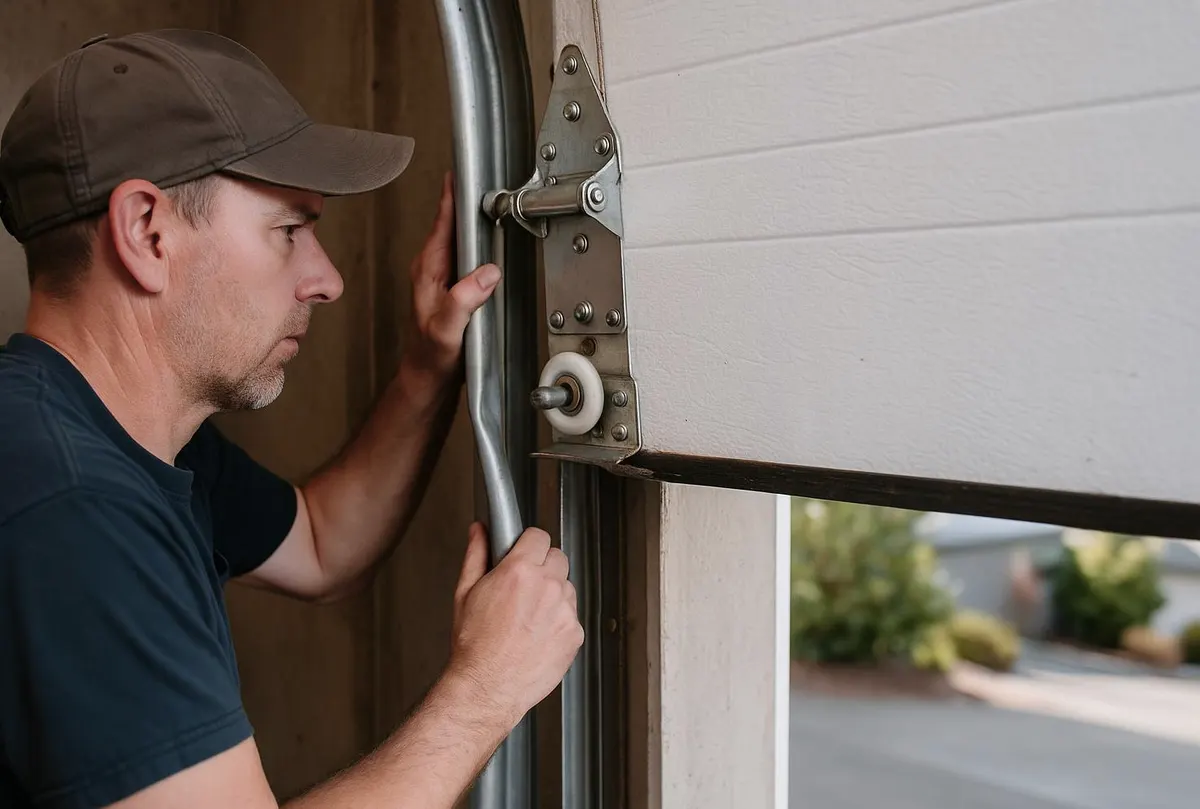
- Lubricate the hinges. Spray a light coat of silicone lubricant directly onto each pivot point where the hinge sections connect. Open and close the door manually a few times to work it in.
- Lubricate the rollers, carefully. If your door has steel ball-bearing rollers, apply lubricant to the bearing itself, not the wheel surface. If your rollers are nylon, skip them entirely — they're self-lubricating and spray can damage the plastic.
- Give the springs a light coat. A thin layer of silicone lubricant on torsion or extension springs reduces metal-on-metal friction. Spray and wipe off the excess; don't apply heavy grease here, and never attempt to adjust or remove a spring yourself.
- Lubricate the opener's drive rail or chain. Use white lithium grease on the rail where the trolley slides, following your opener's manual. A chain-drive opener needs a light coat on the chain itself; belt-drive and screw-drive systems have different requirements, so check your manual before applying anything.
- Treat the lock mechanism. If your door has a manual lock, a small amount of graphite lubricant in the keyhole and slide bolt keeps it from freezing up in cold weather.
- Wipe off all excess lubricant. Any pooling or drips will just collect dust and grit through the winter.
- Cycle the door several times. Reconnect the opener and run the door up and down a few times, listening for any remaining grinding or catching sounds.
Plan to repeat this maintenance about every six months — once in the fall before the hard freezes and road salt start, and again in spring once storm season and humidity roll back in.
What's Safe for a Homeowner vs. What Needs a Technician
Hinges, rollers (the bearing only), the lock, and the opener rail are all reasonable DIY jobs with the right products and a little care. Where it gets risky is anything involving the torsion springs beyond a light surface spray, bent or misaligned tracks, or an opener that's grinding, slipping, or struggling to lift the door even after lubrication. Springs are under heavy tension and track alignment affects the whole door's balance — both are jobs for a trained technician, not a weekend project.
When to Call Elkhart Garage Door Solutions
If you've lubricated everything properly and the door still binds, sags, or makes grinding noises, something beyond lubrication is going on — often a worn roller, a spring losing tension, or a track that's shifted slightly out of alignment. That's a good time to schedule Garage Door Maintenance, where a technician checks balance, hardware wear, and opener performance in one visit. If a spring looks stretched, rusted, or has visibly separated coils, don't wait — that calls for professional Spring Replacement before it fails under tension.
If your garage door in Elkhart, IN needs a tune-up before winter really sets in, call Elkhart Garage Door Solutions and we'll get it running smoothly and safely.