
Start With the Easy Fixes Before You Blame the Motor
If your garage door opener has gotten louder over the past few months, the fix is almost always mechanical, not electrical. Loose hardware, dry metal parts, and worn rollers cause the vast majority of noise complaints. The exceptions: a sudden grinding sound from inside the motor housing, an opener that's 15+ years old and straining, or noise that started right after a storm or power surge. Those point to a failing opener or damage, not a simple tune-up.
Elkhart's big seasonal swings make this worse than it might be elsewhere. Cold snaps stiffen old grease and shrink metal joints just enough to create rattles that weren't there in August. Humid summers swell wood garage doors and door frames, which can throw off alignment. If your opener has been getting noisier as the weather cooled, that's not a coincidence.
Tools You'll Need
- Socket wrench or ratchet set
- White lithium grease (not WD-40 or motor oil — those attract dust and grit)
- Nylon replacement rollers, if yours are still metal
- Rubber anti-vibration pads (sold for garage door openers)
- Stepladder and safety glasses
Step-by-Step: Quieting a Noisy Opener
- Tighten every bolt and bracket. Start at the motor unit, then work along the rail to the header bracket, and down to the hinges and track brackets. Vibration loosens these over months of use, and a loose bracket can turn a quiet opener into a rattling one almost overnight.
- Lubricate the moving metal parts. Apply white lithium grease to hinges, rollers (if metal), and the opener's drive screw or chain. Avoid spraying the track itself — a clean, dry track is actually better for roller contact than a greasy one.
- Replace worn metal rollers with nylon ones. Metal rollers are loud by design. Swapping them for nylon rollers with sealed bearings is one of the single biggest noise reductions you can make for under an afternoon's work.
- Add anti-vibration pads between the motor and the ceiling bracket. These rubber isolators stop the motor's vibration from transferring into the ceiling joists, which is often what makes an opener sound like it's shaking the whole garage.
- Check chain or belt tension. A chain-drive opener with too much slack will slap against the rail with every open and close. Most openers have a tensioning nut near the motor — consult your manual, but a quarter-turn adjustment is usually enough. Don't overtighten; that strains the motor.
- Inspect the arm connecting the opener to the door. A loose J-arm or bent connecting rod will clunk at the start and end of every cycle. Tighten the connecting bolt, and replace the arm if it's bent.
What a Homeowner Can Handle vs. What Needs a Technician
Everything above is reasonable DIY work with basic tools. Where you should stop and call a technician instead:
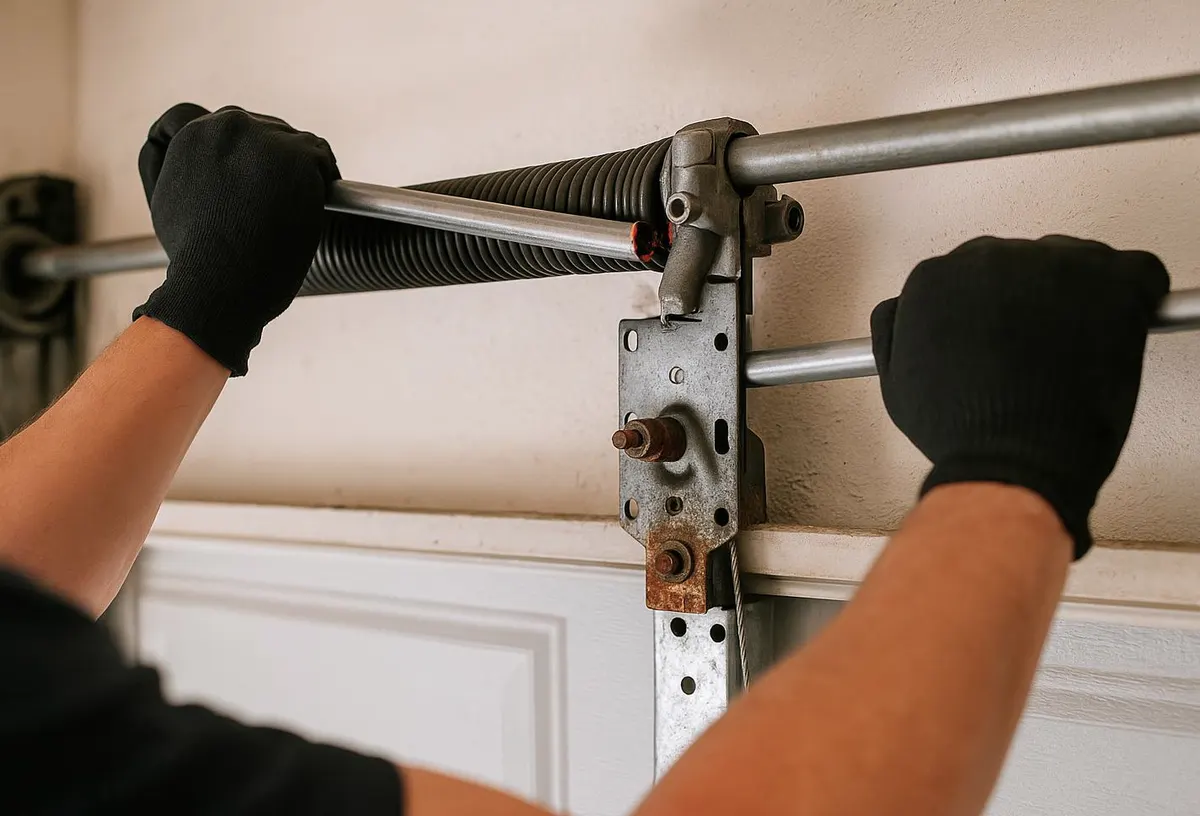
- Any noise coming from the springs — these are under extreme tension and not safe to adjust or replace yourself.
- Frayed or visibly damaged cables.
- A bent or misaligned track, which usually means the door itself needs realignment, not just the opener.
- Grinding or whining from inside the motor housing, which usually means worn internal gears.
- An opener that trips the breaker, smells like burning, or makes an electrical buzzing sound.
These issues involve either high-tension hardware or electrical components where a mistake can cause real injury or expensive damage.
When the Real Fix Is a Belt-Drive Swap
If you've done the tune-up above and the opener is still noisy, the drive mechanism itself may be the problem. Chain-drive openers are inexpensive but inherently loud — metal link hitting metal rail, cycle after cycle. Belt-drive openers use a reinforced rubber belt instead, which runs dramatically quieter and doesn't need regular lubrication. Screw-drive openers fall in between: quieter than chain, but can get louder in cold weather as the grease on the threaded rod stiffens.
A belt-drive conversion generally means replacing the entire opener unit, not just the drive component — openers aren't typically sold with interchangeable drive systems. As a national price range, a mid-range belt-drive opener with installation typically runs somewhere in the $350–$600 range, depending on horsepower, battery backup, and smart-home features. For anyone attached to the garage (a common layout here, especially with finished basements and bonus rooms above garages), the quieter operation is often worth it on its own — no more late-night or early-morning door cycles rattling through the house.
When to Call Elkhart Garage Door Solutions
If you've tightened hardware, greased the moving parts, and the noise is still there — or if you heard something that sounds like metal grinding, a spring pinging, or a motor straining — it's time to call in a technician. Our Garage Door Opener Service covers everything from drive adjustments and gear replacement to full belt-drive upgrades, and our Garage Door Maintenance visits catch the small issues (loose brackets, dry hinges, misaligned tracks) before they turn into bigger, louder problems — which matters most right before winter sets in and cold makes everything stiffer and noisier.
If your garage door opener is driving you up the wall in Elkhart, Goshen, Mishawaka, or anywhere nearby, give Elkhart Garage Door Solutions a call. We'll track down the actual source of the noise and fix it right the first time.